

Most back pain eases with simple care at home. Keep moving gently, use heat or cold, sleep with support, and add calming tools that fit your evenings. One of those tools is a small PEMF device. PEMF stands for pulsed electromagnetic field, a soft pulse the body feels as nothing at all. If you want to try one, you can try coilywaves for 90 days alongside the steps below.
This guide is written in plain words. It covers what helps, how to do it safely, and when to call a doctor.
TL;DR
- Most sudden back pain gets better in a few weeks. Stay gently active. Do not lie in bed all day.
- Cold packs may ease pain. Hot packs may increase blood flow. A small pillow can make sleep easier on your back.
- Reviews of PEMF therapy report relief for chronic low back pain, often alongside usual care.
- Numbness, leg weakness, fever, or trouble urinating mean you should see a doctor soon.
- coilywaves offers a PEMF-capable Wave Generator kit for $55, with free US shipping and a 90-day guarantee.
Table of Contents
- How long back pain usually lasts
- Start with gentle movement
- Heat and cold
- Sleep positions that ease the back
- Other natural approaches and what research says
- What PEMF therapy is
- Try coilywaves for calmer evenings
- A simple daily routine
- When to see a doctor
- FAQ
- Sources
How long back pain usually lasts
It helps to know the type of pain you have. The National Institute of Arthritis and Musculoskeletal and Skin Diseases (NIAMS) describes acute back pain as lasting days to weeks, subacute pain as lasting 4 to 12 weeks, and chronic pain as lasting longer than 12 weeks.
The causes vary. They include injury, changes in the spine with age, and arthritis. Because the cause can differ, the best care can differ too. A page on lower back ache in women explains how causes, warning signs, and duration shape what helps.
Start with gentle movement
It feels natural to rest when your back hurts. But too much rest can slow you down. NIAMS says most acute back pain improves after a few weeks of home treatment. Its advice is simple:
- Do not lie down all day.
- Pause activities that make the pain worse.
- Add a little more activity each day, slowly.
A short walk around the house counts. So does standing up to stretch each hour. Go at your own pace. If you plan an exercise routine, ask your doctor or a physical therapist first, especially if you are over 45 or have other health conditions.
Heat and cold
Heat and cold are old, kind remedies. NIAMS notes that cold packs may help pain and hot packs may increase blood flow.
Here is an easy way to use them:
- Wrap the pack in a thin towel. Never place it straight on bare skin.
- Keep each session short, and check your skin as you go.
- Try cold first if the pain is new. Try warmth if the muscles feel tight and stiff.
- Stop if your skin turns very red, numb, or sore.
If you have numb skin or poor circulation, ask your doctor before using heat.
Sleep positions that ease the back
Good sleep and back pain are tied together. Pain wakes you at night. Poor sleep makes pain feel stronger the next day. A few small changes can help.
NIAMS suggests two pillow spots. If you sleep on your side, place a small pillow between your knees. If you sleep on your back, place one under your knees. If you can, avoid sleeping on your stomach. All of this comes from its home care guidance.
A calm evening also helps. Dim the lights. Turn off the news. Take a few slow breaths. Some people like to add a quiet device to this routine. We write more on that in our guide to drug-free options that fit together.
Other natural approaches and what research says
The National Center for Complementary and Integrative Health (NCCIH) reviews gentle therapies. It reports that low- or moderate-quality evidence suggests yoga, tai chi, mindfulness, progressive relaxation, acupuncture, and spinal manipulation may help chronic low back pain. It also says topical cayenne may help.
A few notes on using these well:
- Yoga and tai chi. Choose a gentle class. Tell the teacher about your back. Injuries can happen if you push too far.
- Massage. It can feel soothing. NCCIH rates the evidence for acute low back pain as low quality, so think of it as comfort care.
- Mind and body skills. Slow breathing, relaxation, and mindfulness can calm a tense body. Some readers also look at hypnosis for pain and recovery.
- Creams and rubs. Test a small patch of skin first.
Take care with pills and herbal products
“Natural” on a label does not always mean safe. The FDA has warned about a joint pain product found to contain meloxicam, a hidden drug, that was not listed on the label. Hidden drugs of this kind can carry heart and stomach risks. They can also interact with other medicines. In 2024, an herbal pain supplement was recalled after tests found hidden drugs in it.
If you take any supplement, tell your doctor or pharmacist. This matters most if you take blood thinners or other daily medicines. A device that sits on your nightstand has no ingredients to worry about, which is one reason some people prefer a drug-free path.
What PEMF therapy is
PEMF is a gentle pulse of low-level magnetic energy. You do not feel it. The device sits near the sore area, or beside you while you rest.
Here is what the research says. NCCIH’s page on magnets for pain describes a 2022 review of 14 studies with 618 people. It found that PEMF was beneficial for reducing pain in chronic low back pain. Sessions in those studies ran for 1 to 12 weeks, on 2 to 7 days each week. NCCIH adds that PEMF may give extra relief on top of usual care, physical therapy, or pain medicines.
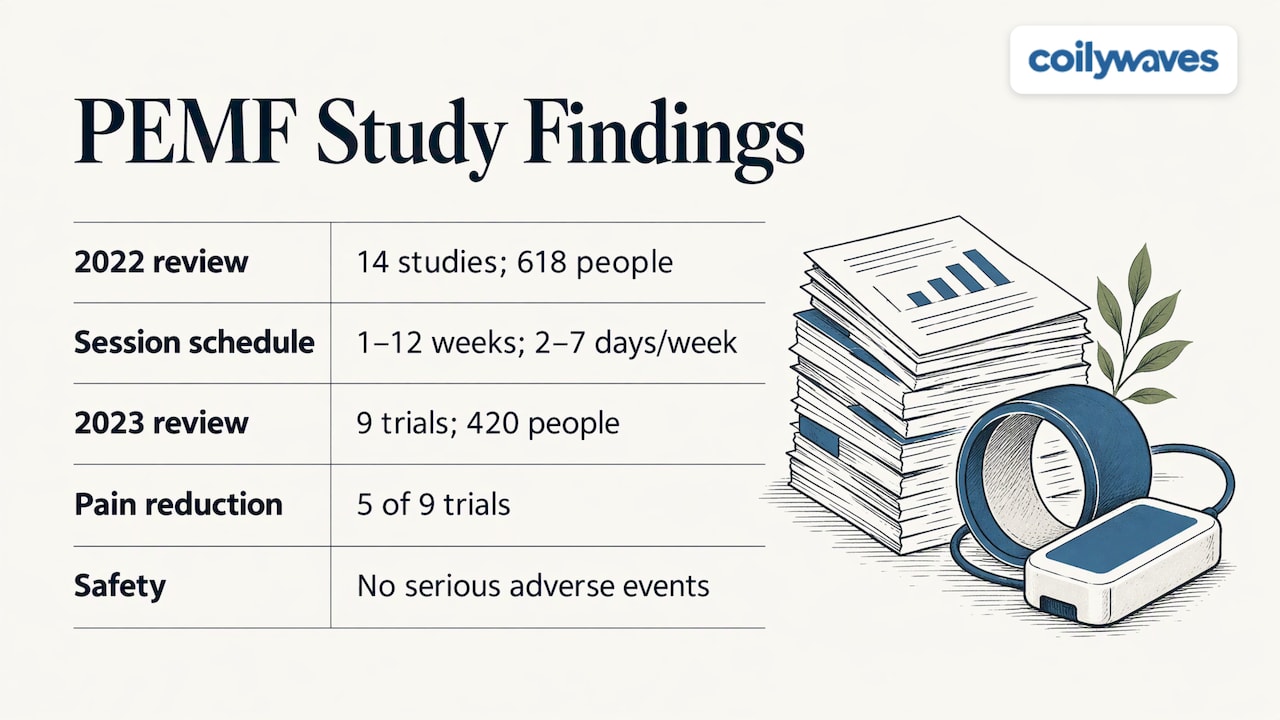
Another review, from 2023, looked at nine randomized trials with 420 people who had nonspecific low back pain. Five of the trials found real pain reduction and better function. The same review found no serious adverse events in the included trials.
Two plain points follow from this. First, PEMF works best as one part of a routine, with movement, heat, and good sleep. Second, the studies used different settings and schedules. A steady routine matters more than any single session.
People also ask about PEMF for arthritis and fibromyalgia. We cover those in our guides on joint pain relief and fibromyalgia pain relief options.
Safety with PEMF
Magnetic devices can interfere with pacemakers and insulin pumps. NCCIH advises that people in these situations talk with a health professional first, and remove magnetic devices before an MRI. If you are pregnant or have any implanted device, ask your doctor before you begin.
Try coilywaves for calmer evenings
We make a small frequency Wave Generator kit for calmer evenings and better sleep. It comes in sage green or pearl white. It includes a Wave Handbook, which walks you through simple protocols step by step.
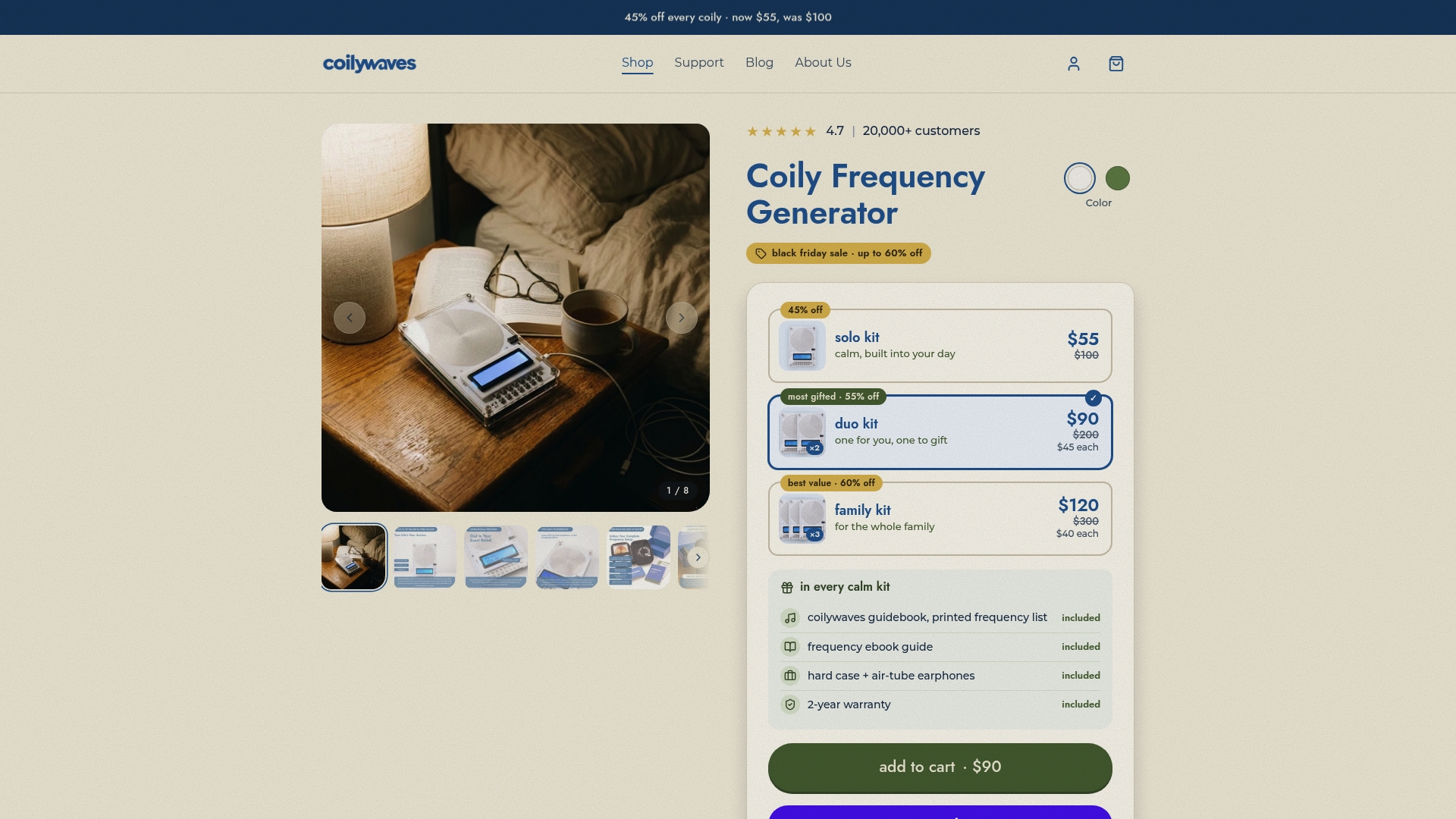
The kit has a silent PEMF mode, so you can rest in a quiet room. It also has air-tube earphones for the audio mode. It produces a pure analog sine wave, and you can choose a frequency to the decimal. Our frequency library covers 0.01 Hz to 100,000 Hz.
The kit costs $55. Shipping is free in the US. The kit is sold in the US only. Every order is covered by a 90-day guarantee, so you can try coilywaves for 90 days at your own pace. If you want to look around first, our frequency library shows what the device can play, and our list of frequencies for sleep, calm and focus is a gentle place to start.
A simple daily routine
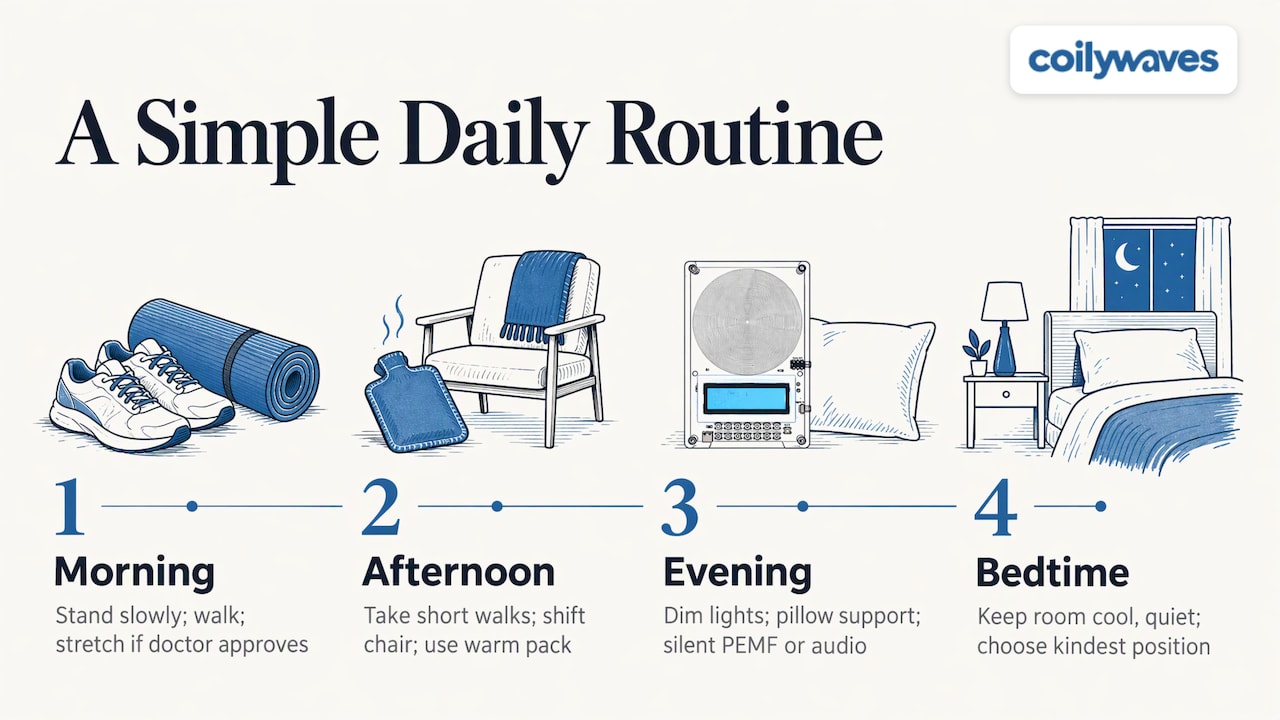
You do not need to do everything. Here is one easy day.
Morning. Stand up slowly. Walk for a few minutes. Stretch gently if your doctor says it is fine.
Afternoon. Take short walks. Change your chair position now and then. Use a warm pack on tight muscles for a short time.
Evening. Lower the lights. Place a small pillow where it supports your back or knees. Settle in with your Wave Generator in silent PEMF mode, or with the earphones on for audio. Breathe slowly.
Bedtime. Keep the room cool and quiet. Pick the sleep position that feels kindest to your back.
Give any routine a few weeks. Pain that has lasted for months often changes slowly. Keep a short note each night: how your back felt, and how you slept. After a few weeks, you can see what is helping.
The same calm habits help when daily stress is high. Our page on stress relief for caregivers has more ideas. And if your back aches after a long walk or garden work, see pain relief after exercise.
When to see a doctor
Home care is for common back pain. Some signs call for a medical check. NIAMS says to seek evaluation for severe pain that does not improve with treatment, pain after an injury, fever, unexplained weight loss, numbness or tingling, leg weakness or numbness, or trouble urinating.
Trouble urinating, or numbness in the legs, needs care right away. Call your doctor or go to the emergency room.
If your pain lasts more than 12 weeks, see your doctor as well. A 2024 review in American Family Physician defines chronic low back pain as lumbar pain lasting at least 12 weeks. It notes that scans are not routine, but are used when there are warning signs or when pain does not settle with simple care. Your doctor can tell you which path fits you.
FAQ
What is the best natural way to relieve back pain at home?
Start with gentle movement, short walks, and heat or cold packs. NIAMS advises against lying down all day and suggests adding activity slowly. Sleeping with a small pillow for support can help too.
Does PEMF help back pain?
A 2022 review of 14 studies, summarized by NCCIH, found PEMF beneficial for reducing chronic low back pain. It may add relief on top of usual care. Settings and schedules varied across studies, so a steady routine is wise.
Is PEMF safe?
The 2023 review of nine trials reported no serious adverse events. People with pacemakers or insulin pumps should talk with their doctor first. Remove magnetic devices before an MRI.
How much does the coilywaves kit cost?
The kit costs $55, with free shipping in the US. It is sold in the US only. It comes with a Wave Handbook and a 90-day guarantee.
When should I worry about back pain?
See a doctor if you have numbness, leg weakness, fever, trouble urinating, or pain after an injury. Also see one if pain stays severe or lasts past 12 weeks.
Sources
- NIAMS: Back Pain Symptoms, Types, and Causes
- NIAMS: Living With Back Pain
- NCCIH: Low-Back Pain and Complementary Health Approaches
- NCCIH: Magnets for Pain
- Kull and colleagues, 2023: Efficacy of pulsed electromagnetic field therapy on pain
- American Family Physician, 2024: Chronic Low Back Pain in Adults
- FDA: SILINTAN may be harmful due to hidden drug ingredient
- FDA: Infla-650 voluntary nationwide recall

