

A stress headache often feels like a tight band around your head. The best natural relief is usually simple: ease the tight muscles, rest, drink water, and calm your evenings so your body can let go. This guide walks through each step in plain words. It also tells you when a headache needs a doctor. If calmer evenings are part of your plan, you can try coilywaves for 90 days.
TL;DR
- A stress headache, also called a tension headache, comes from tight muscles in the neck, scalp, face and jaw.
- Heat on the neck, a cool cloth on the forehead, a quiet room, water and gentle massage are the first things to try.
- Slow breathing, short walks and good sleep help keep these headaches from coming back.
- Do not take pain medicine more than 3 days a week. It can cause rebound headaches.
- A new headache after age 50, or one that feels different from your usual, needs a doctor’s visit.
Table of Contents
- What a stress headache is
- First steps at the first sign of pain
- Gentle massage for neck and shoulders
- Fix the small habits that tighten your neck
- Calm the mind to calm the muscles
- Peppermint oil on the temples
- Make evenings calm, and sleep will help
- A calm evening tool: coilywaves
- Use pain medicine with care
- When to see a doctor
- A simple plan for the week
- FAQ
- Sources
What a stress headache is
The National Institute of Neurological Disorders and Stroke calls tension-type headache the most common kind of headache. It usually brings mild to moderate pressure on both sides of the head. It can last from 30 minutes to 7 days.
Stress is a big trigger. When you are worried or tense, the muscles in your neck, face, scalp and jaw can tighten. MedlinePlus says this tightening is often a response to stress or anxiety. The result is pain or discomfort in the head, scalp or neck.
Other common triggers are:
- Poor or too little sleep
- Mental strain
- Sitting or standing in a strained posture
- Alcohol
- Not drinking enough water
- Bright sunlight
The VA and Department of Defense self-care guide describes the pain as often like a band around the head. It is usually mild.
Knowing this helps you choose. Most natural steps work in one of two ways. They either loosen the muscles or lower the stress that tightens them.
First steps at the first sign of pain
Act early. Do not wait until the pain is strong. The Veterans Affairs health library suggests you take time out at the first sign and rest in a quiet place.
Use heat or cold
Heat relaxes tight muscles. The Mayo Clinic lists a heating pad on low, a hot water bottle, a hot shower or bath, or a warm compress on the neck and shoulders. It also suggests an ice pack or cool washcloth on the forehead.
Try one, then the other. See which feels better to you. Some people like warmth on the neck and a cool cloth on the brow at the same time.
Keep the heating pad on low. Place a cloth between it and your skin. Do not fall asleep on it.
Rest in a quiet room
Turn down the lights. Turn off the screen. Lie back or sit with your head supported. Rest for 15 to 20 minutes. Johns Hopkins Medicine also suggests resting in a quiet, dark place.
Drink a glass of water
Not drinking enough is a common trigger. The Cleveland Clinic gives a daily guide of about 104 ounces of fluid for men and 73 ounces for women. That includes water from food and other drinks. Ask your doctor about your own amount if you have a heart or kidney condition.
Keep a glass by your chair. Sip through the day.
Go easy on coffee
A little caffeine may help. The Cleveland Clinic mentions about 100 to 150 mg, which is one small cup of coffee. Too much can cause rebound headaches. The Mayo Clinic says more than 400 mg a day, about four cups, can cause headaches and irritability. Even quitting suddenly can bring on a headache. If you want to cut back, do it slowly.
Gentle massage for neck and shoulders
Tight neck and shoulder muscles are at the heart of most stress headaches. Massage can be done by you, with no tools.
- Sit down and drop your shoulders.
- Use your fingertips to make small, slow circles on your temples.
- Move to the base of your skull. Press gently where the neck meets the head.
- Work down the sides of your neck to the tops of your shoulders.
- Spend a minute on each spot. Breathe slowly.
The Mayo Clinic suggests gentle massage of the temples, scalp, neck and shoulders. Keep your touch light. The National Center for Complementary and Integrative Health notes that massage risk appears low, but rare serious problems have been reported, mostly with vigorous deep-tissue work. If you take blood thinners, or have a neck injury, ask your doctor before you try firm massage.
Fix the small habits that tighten your neck
Many stress headaches begin at a desk, a kitchen table or a phone. The Cleveland Clinic gives clear, easy tips:
- Hold your phone at eye level.
- Set your computer so your eyes rest on the top quarter of the screen.
- Look away from the screen at least every 20 minutes.
- Sit with your knees and hips at about a 90-degree angle.
- Get up once an hour. Stretch your neck gently.
The Kaiser Permanente Washington headache guideline also lists moving screens to eye level, along with gentle stretching and regular sleep, exercise and meals.
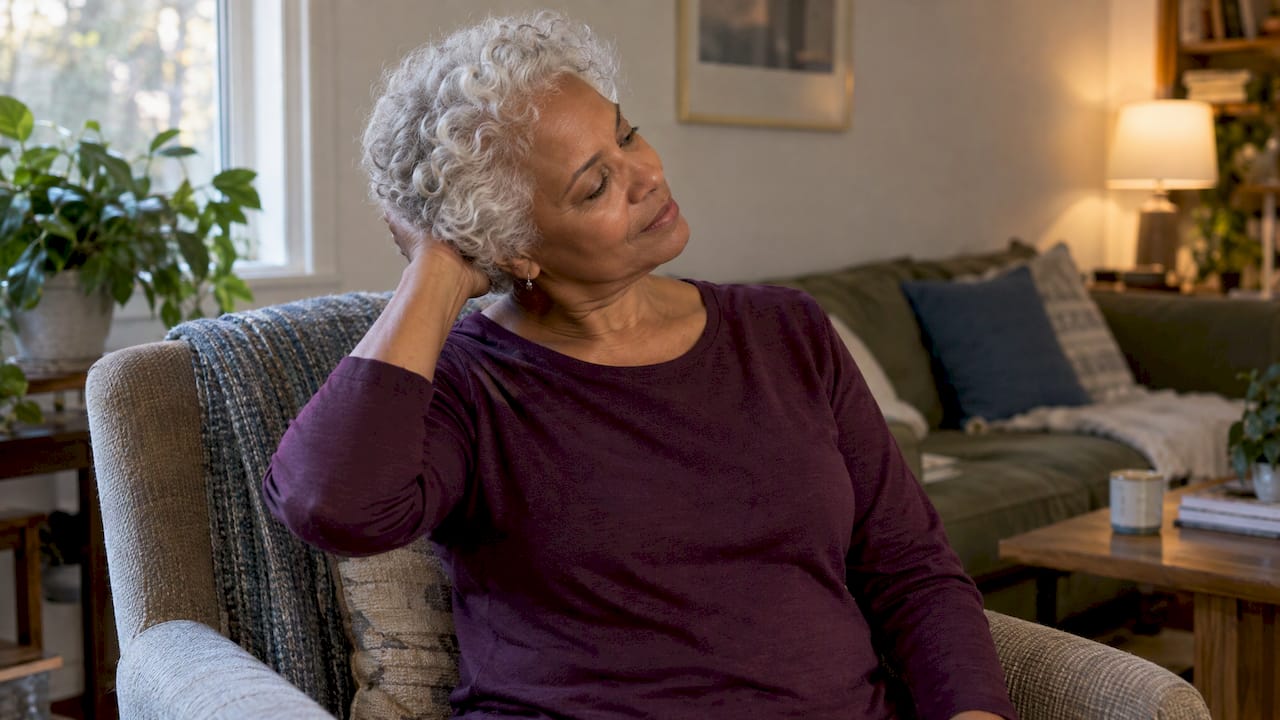
A simple neck stretch: sit tall. Let your right ear drop toward your right shoulder. Hold for 20 seconds. Come back to center. Repeat on the left. Never force it.
Johns Hopkins also suggests exercise of at least 30 minutes a day and regular meals, with no skipped breakfast. A walk after lunch covers movement and fresh air at once.
Calm the mind to calm the muscles
Stress becomes physical. Dr. Bang of the Cleveland Clinic explains that it shows up as tight neck and shoulder muscles. Reducing stress can help those muscles relax too.
The Mayo Clinic suggests a daily 10-minute relaxation exercise. Here is an easy one:
- Sit or lie down somewhere quiet.
- Breathe in through your nose for a count of four.
- Breathe out through your mouth for a count of six.
- Let your jaw hang loose and your shoulders sink.
- Keep going for 10 minutes.
Other options from the Cleveland Clinic are short walks, meditation, music, progressive muscle relaxation and gentle yoga. In progressive muscle relaxation, you tighten one muscle group for a few seconds, then let go, and move up the body.
Some people also like guided calm. A stress relief hypnosis session can teach a calming phrase you can use on a hard day. It is one more gentle way to practice slowing down.
If worry is behind your headaches, name it. Write down what stressed you before the pain began. Over a few weeks, patterns show up. You can then plan around them.
Peppermint oil on the temples
Peppermint oil is a popular natural choice. A review in American Family Physician describes a trial of 41 people where a 10 percent peppermint oil preparation lowered headache intensity after 15 minutes. The results were close to those of acetaminophen, with no side effects reported.
Use it with care:
- Apply it on the skin only. Do not swallow it.
- Dilute it in a carrier oil unless the label says it is ready to use.
- Keep it away from your eyes.
- Do not use it on or near the face of infants or young children.
- Excess amounts can be toxic.
Stop if your skin gets red or itchy.
Make evenings calm, and sleep will help
Poor sleep is a trigger. Stress makes sleep harder. Then a tired body holds more tension. It can turn into a loop.
Johns Hopkins suggests going to sleep and waking up at the same time each day. Start there. Then build a quiet hour before bed:
- Dim the lights.
- Put the phone in another room.
- Take a warm bath or shower.
- Do your slow breathing.
- Keep the bedroom cool and dark.
If racing thoughts keep you up, our guide on stress and sleeplessness goes deeper. You may also like these quiet evening ideas for swapping the evening scroll for something softer.
A calm evening tool: coilywaves
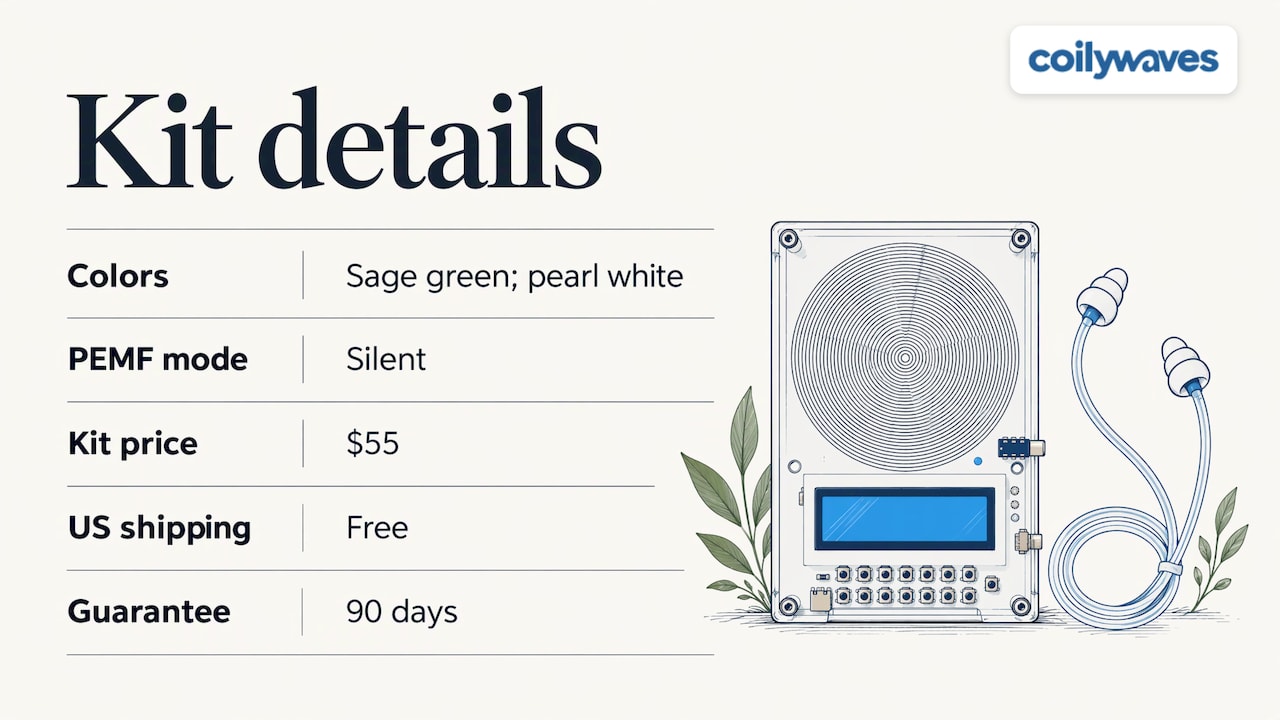
coilywaves makes a frequency Wave Generator kit for calmer evenings and better sleep. It comes in sage green or pearl white. The kit includes a Wave Handbook that guides you step by step.
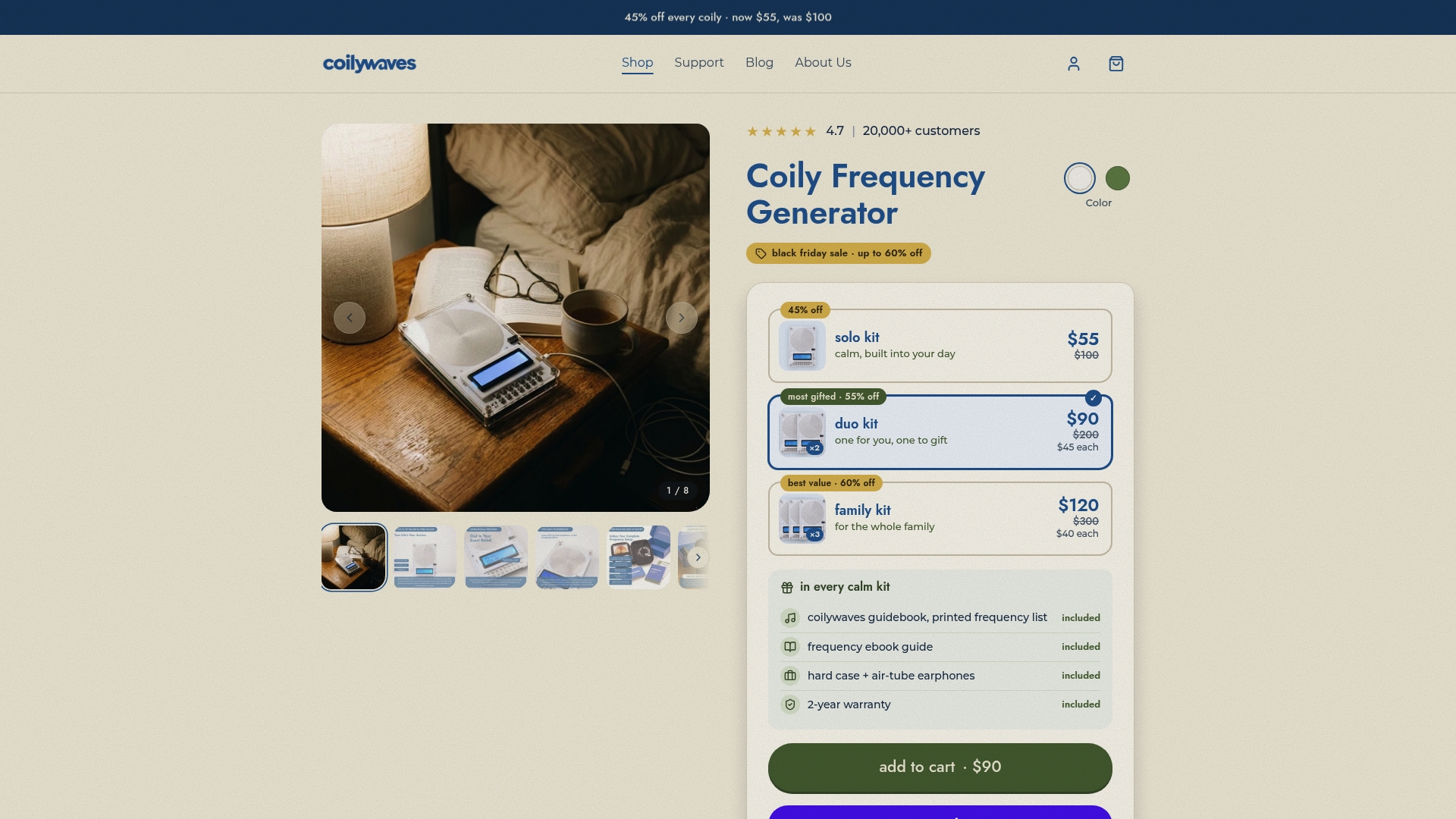
The device has a silent PEMF mode and comes with air-tube earphones. It produces pure analog sine wave output, and you can choose a frequency with decimal precision. Our frequency library shows the range, and the list of frequencies for sleep, calm and focus helps you pick a place to start.
The kit is $55. Shipping in the US is free. It is sold in the US only. Your purchase is backed by a 90-day guarantee, so you can try coilywaves for 90 days in your own evening routine, at your own pace.
It is a quiet, hand-held way to set aside time for yourself. Use it alongside the steps above: heat, water, slow breathing and a regular bedtime.
Use pain medicine with care
Many people reach for an over-the-counter pain pill. That is fine now and then. Frequent use can backfire.
- MedlinePlus says using pain medicine more than 3 days a week can cause rebound headaches. It also says acetaminophen should not go over 4,000 mg a day.
- The Kaiser Permanente Washington guideline also limits over-the-counter pain medicines to no more than 3 days a week. It suggests no more than 2 cups of caffeine a day.
- The Mayo Clinic uses a looser measure: more than nine days a month can make headaches harder to treat.
A simple rule: if you need medicine most weeks, talk to your doctor. Read labels for the dose, and check with your doctor or pharmacist if you take other medicines.
When to see a doctor
Natural steps are for ordinary tension headaches. Some headaches are not ordinary. Because you are 45 or older, pay close attention to this list.
Get help right away
Call 911 or go to the emergency room if you have:
- A sudden, severe headache, or what feels like the worst headache of your life
- A headache with fever, a stiff neck, or confusion
- Trouble speaking, double vision or other vision changes, weakness, numbness, or loss of balance
- Seizures
- A headache after a head injury
These come from MedlinePlus and the Mayo Clinic. Johns Hopkins adds that a “worst headache ever” may signal a stroke.
Book a visit soon
See your doctor if:
- You have a new headache after age 50. The VA and Department of Defense guide lists this as a red flag.
- The headache pattern changes, or it feels different from your usual ones.
- Your usual treatments stop working.
- You need headache medicine more than twice a week (Mayo Clinic).
- Headaches come more than once a week, or last several days (Cleveland Clinic).
- Head pain gets worse during exercise, or does not improve in 24 hours, per Veterans Affairs.
- Headaches get worse over days or weeks, as NIH News in Health lists.
The same NIH publication defines chronic headache as more than 15 headache days a month. That level deserves a doctor’s care.
A simple plan for the week
You do not need to do everything. Pick a few steps and make them regular.
| When | What to do |
|---|---|
| Morning | A glass of water. A small cup of coffee at most. A short stretch. |
| Midday | A walk. Look away from the screen every 20 minutes. |
| Afternoon | Check your posture. Drop your shoulders. Sip water. |
| First sign of pain | Warm cloth on the neck, cool cloth on the brow, a quiet room. |
| Evening | Dim lights, slow breathing, a calm hour before bed. |
| Bedtime | The same time each night. |
Keep a short headache note for two weeks. Write the day, the time, what you did and how you slept. Patterns will show. Bring the note to your doctor if the headaches continue.
FAQ
How do I ease a stress headache fast?
Start with rest in a quiet room. Put a warm cloth or heating pad on low on your neck, and a cool cloth on your forehead. Drink a glass of water and breathe slowly for several minutes. Gentle massage of the temples and neck can help too.
What are the best natural remedies for tension headaches?
The steps health groups name most often are heat or cold, rest, water, gentle massage, short walks, relaxation exercises and regular sleep. Peppermint oil on the skin is another choice, used with care. Pick the ones that feel good to you and use them often.
Can stress alone cause a headache?
Yes. Emotional stress is a well-known trigger. It makes the muscles in your neck, scalp, face and jaw tighten, and that tightness brings on the pain. Poor sleep and long hours at a screen can add to it.
How often is too often for headaches?
If you have headaches more than once a week, or need medicine more than 2 or 3 days a week, call your doctor. The same goes for any headache that changes in pattern or feels new, especially after age 50.
Sources
- Headache, National Institute of Neurological Disorders and Stroke
- Managing tension headaches at home, MedlinePlus
- VA/DoD Headache Self-Care Guide
- Headache, Tension, Veterans Affairs
- Tension-type headaches: Self-care measures for relief, Mayo Clinic
- Tension headache symptoms and causes, Mayo Clinic
- 10 Tips for Tension Headache Self-Care, Cleveland Clinic
- 9 Natural Remedies for Headache Relief, Cleveland Clinic
- Tension Headaches, Johns Hopkins Medicine
- Massage Therapy: What You Need To Know, NCCIH
- Peppermint Oil, American Family Physician
- Migraine and Tension Headache Guideline, Kaiser Permanente Washington
- Tension Headaches, Migraine, and More, NIH News in Health

